

When I first started converting my cargo trailer, I underestimated how much of a difference insulation would make. I figured a few blankets and a space heater would be enough—but after one freezing night in the mountains and a sweltering afternoon in the desert, I realized insulation isn’t optional. It’s essential.
Proper insulation is the foundation of a comfortable, quiet, and energy-efficient trailer. It helps you stay warm on winter trips, cool during summer adventures, and prevents moisture from building up inside. The best part? It’s a project most DIYers can tackle in a weekend with the right materials.
In this post, I’ll walk you through how to insulate a cargo trailer for year-round camping, including the best materials, step-by-step installation tips, and real-world advice from experience. Whether you’re building your trailer from scratch or upgrading your current setup, this guide will help you create a space that’s both durable and comfortable in every season.
Why Insulating Your Cargo Trailer Matters
Insulation isn’t just about temperature—it affects everything from comfort to safety to long-term maintenance.
Here’s why insulation is a must:
- Temperature Control: Keeps the trailer cool in summer and warm in winter.
- Noise Reduction: Dulls road noise, rain, and campground activity.
- Condensation Prevention: Stops moisture buildup that can cause mold and rust.
- Energy Efficiency: Makes your heater, fan, or AC more effective.
In other words, good insulation turns your trailer into a true all-season camper instead of a metal box that fights every change in weather.
If you’re new to cold-weather camping, the National Park Service Winter Safety Tips are a great resource for understanding temperature management in outdoor environments.
Best Insulation Materials for Cargo Trailers
Over the years, I’ve tested and researched a lot of insulation materials for different build styles. Here’s a breakdown of the most effective (and affordable) options for DIY trailer projects.
1. Rigid Foam Board Insulation
Why it’s great:
✅ Excellent R-value per inch (strong thermal protection)
✅ Easy to cut, fit, and install between wall studs
✅ Lightweight and Moisture-resistant
It’s ideal for walls, floors, and ceilings. Just measure your panels, cut with a utility knife, and secure with adhesive spray or screws.
Pro Tip: Use foil tape along seams to prevent air leaks and lock in performance
2. Spray Foam Insulation
Why it’s great:
✅ Excellent coverage for sealing small gaps, corners, and hard-to-reach places
✅ Provides both insulation and an air barrier at the same time
✅ Provides strong moisture barrier
It’s a good choice for hard-to-reach areas like wheel wells or behind trim pieces. Just be cautious—spray foam expands quickly, so go slow and even.
Safety Tip: Wear gloves and a respirator during application to avoid irritation.
3. Reflective Insulation (Radiant Barrier)
Why it’s great:
✅ Reflects radiant heat (great for summer camping)
✅ Thin, flexible, and lightweight
✅ Works well for windows, ceilings, and doors
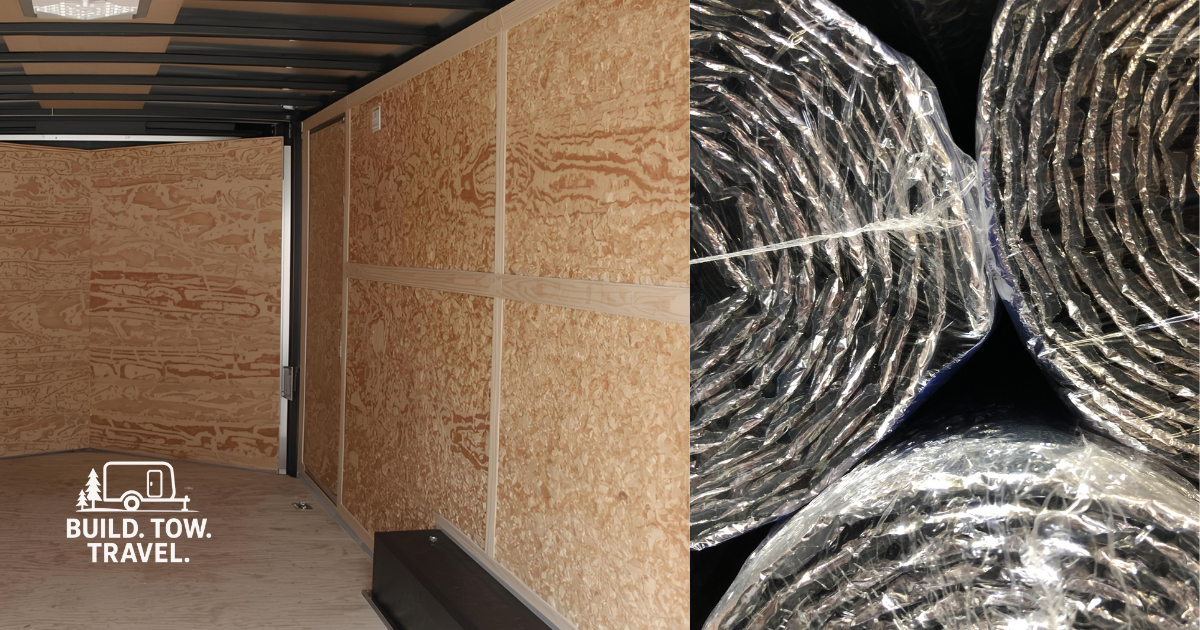
I use Reflectix insulation in combination with foam board. It’s easy to cut and secure with adhesive or Velcro strips, and it helps maintain comfort without adding bulk.
4. Fiberglass Insulation (use with caution)
Why it’s great:
✅ Very budget-friendly
✅ Easy to find
✅ Offers decent R-value and soundproofing
⚠️ Fiberglass can absorb moisture and cause major problems if not sealed properly. If you use it, make sure to cover it with vapor barriers and paneling to prevent condensation and skin irritation.
Step-by-Step: How to Insulate a Cargo Trailer
These steps will help you create a clean, efficient, and durable insulation setup that works year-round.
1: Prep Your Trailer
Start by removing any existing wall panels or flooring. Clean all surfaces to remove dust, grease, or rust. Then, seal gaps around doors, vents, and seams using caulk or expanding foam. This step ensures your insulation does its job.
- Clean walls, ceiling, and floor.
- Seal cracks and gaps with caulk or expanding foam.
2: Choose Your Insulation Materials
For the best results, use a combination:
- Rigid foam board for walls and floors
- Reflectix or radiant barrier for ceilings and doors
- Spray foam for small crevices or wheel wells
This layered approach gives you maximum temperature control without overcomplicating the build.
3: Install Wall Insulation
Cut your foam board to fit snugly between trailer studs. Secure it with adhesive or screws, ensuring there are no gaps. For extra coverage, seal all seams with foil insulation tape.
If you’re adding Reflectix, layer it over the foam board for additional radiant protection.
4: Insulate Ceiling & Floor
- Ceiling: Attach Reflectix or foam board directly under the roof support beams. Leave small air gaps to improve performance.
- Floor: Use rigid foam panels or carpet padding under vinyl flooring or laminate planks for added comfort and insulation.
This is one of the most overlooked areas but makes a huge difference in how warm your trailer feels.
5: Seal It Up & Finish
Once everything’s installed, go over edges, joints, and corners with foil tape or spray foam to lock in the insulation. Then, add paneling, plywood, or decorative wall coverings for a clean finish.
Pro Tip: Keep a few small removable panels for maintenance access to wiring or storage areas.
My Favorite Insulation Products
After several trailer builds, these are the materials I trust most for their durability, performance, and value:
💡 Recommended Product: (lightweight and high R-value).
- Rigid Foam Insulation Board – Lightweight, moisture-resistant, and high R-value. Great for walls and floors.
- Reflectix Insulation Roll – Ideal for radiant barriers and window coverings. Flexible and easy to install.
- Great Stuff Spray Foam Insulation – Expands to seal gaps and hard-to-reach areas.
- Foil Tape for Insulation Sealing – Creates a professional finish and airtight seal.
Extra Tips for Year-Round Comfort
- Thermal Curtains: Block drafts and help regulate temperature.
- Weatherstripping: Apply around doors and windows for a tighter seal.
- Portable Heater or Fan: Maintain airflow and comfort during extreme temperatures.
- Condensation Control: Use moisture absorbers to prevent rust or mildew.
💡 For more temperature-control options, check out Affordable Heating Options for Winter Camping from Build. Tow. Travel — a great resource for safe heating strategies.
Comfort That Travels with You
Insulating your cargo trailer isn’t just about comfort—it’s about creating a livable, efficient space that feels like home wherever you park it. A well-insulated trailer stays quiet, cozy, and protected from the elements all year long.
With a bit of planning, patience, and the right materials, you can transform your trailer into a true all-season camper. Whether you’re chasing snow or sunshine, you’ll be ready to build, tow, and travel—comfortably.


