

Towing a cargo trailer opens up endless opportunities for travel and adventure—but it also comes with safety concerns. One of the most common (and frightening) challenges trailer owners face is trailer sway. If you’ve ever felt your trailer start fishtailing behind your vehicle, you know how dangerous it can feel. The good news? With the right knowledge and gear, you can reduce sway and keep your travels safe and stress-free.
In this guide, we’ll cover what causes trailer sway, how to prevent it, and what to do if it happens on the road. Plus, we’ll share some of the best Amazon gear picks to improve towing stability.
What Causes Trailer Sway?
Trailer sway happens when external forces—like wind, passing trucks, or improper loading—push your trailer side to side. Common causes include:
- Uneven weight distribution inside the trailer.
- Overloading beyond your vehicle or trailer’s capacity.
- Crosswinds or gusts from passing vehicles.
- Incorrect tire pressure on your tow vehicle or trailer.
- Loose or improperly adjusted hitches.
Understanding these factors is the first step toward safer towing.
✅ How to Prevent Trailer Sway
Preventing sway starts before you hit the road. Here are proven ways to keep your rig stable:
1. Distribute Weight Properly
Load 60% of the weight in the front half of the trailer, close to the axle. Keep items evenly balanced left to right. Heavy gear like tools or water jugs should never go in the back.
👉 Affiliate Pick: Cargo Trailer Tie-Down Straps help secure loads and keep gear in place.
2. Use a Weight Distribution Hitch with Sway Control
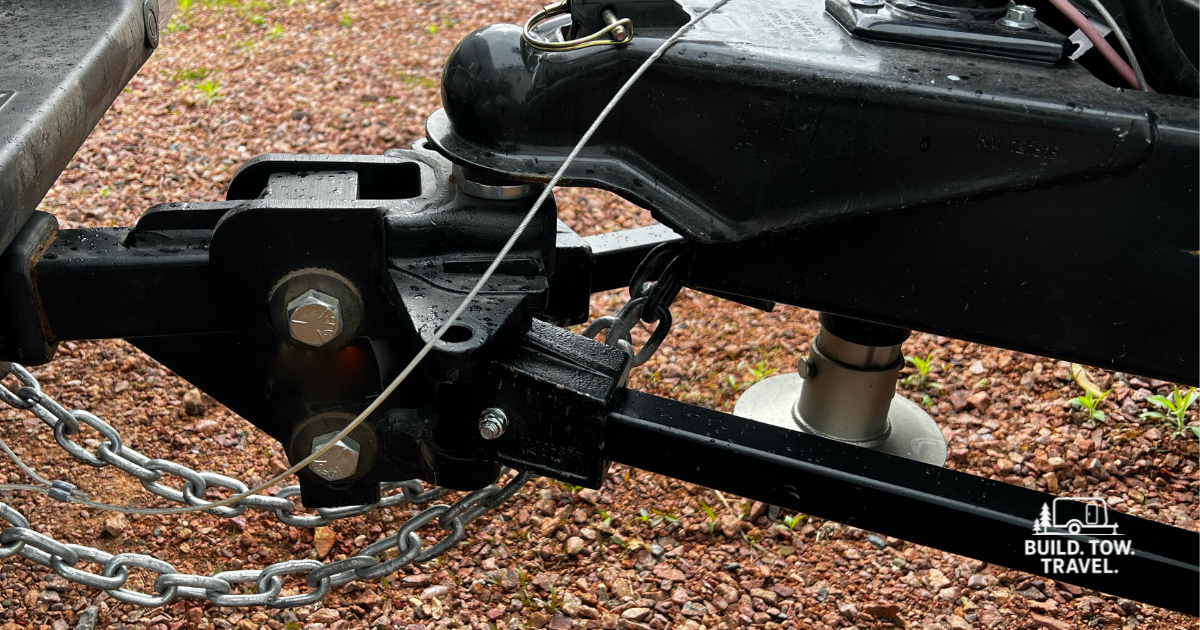
A weight distribution hitch not only levels your trailer but also reduces sway by spreading the weight more evenly across your tow vehicle’s axles. Many modern hitches come with built-in sway control features.
👉 Affiliate Pick: Equal-i-zer 4-Point Sway Control Hitch – highly rated for cargo trailers and travel trailers.
3. Check Your Tires Before Every Trip
Underinflated or mismatched tires can make sway much worse. Always check tire pressure on both your trailer and tow vehicle before driving.
👉 Affiliate Pick: Tire Pressure Monitoring System (TPMS) – a must-have for long hauls.
4. Don’t Overload Your Trailer
Know your GVWR (Gross Vehicle Weight Rating) and stick to it. Overloading puts stress on your hitch, suspension, and makes sway almost inevitable.
5. Add Trailer Sway Bars
Sway control bars act as stabilizers, reducing side-to-side movement from crosswinds or uneven roads. They’re affordable, easy to install, and make a big difference in towing comfort.
👉 Affiliate Pick: Reese Pro Series Friction Sway Control Kit.
🚨 What to Do If Your Trailer Starts to Sway
Even with precautions, sway can still happen. If it does, here’s how to stay safe:
- Stay Calm – Don’t Slam the Brakes. Sudden braking makes sway worse.
- Let Off the Gas. Ease off the accelerator slowly to reduce speed.
- Hold the Steering Wheel Steady. Don’t overcorrect—just keep the wheel straight.
- Apply Trailer Brakes (If Equipped). Manually activating the trailer brakes helps realign it.
Once stopped, check your load, tire pressure, and hitch before continuing.
🔧 Essential Gear for Safer Towing
Here’s a quick list of must-have products to reduce sway and improve towing safety:
- Weight Distribution Hitch with Sway Control
- Trailer Sway Bar Kit
- Heavy-Duty Ratchet Straps
- Tire Pressure Monitoring System
- Trailer Brake Controller
🛻 Final Thoughts
Trailer sway can turn a fun road trip into a stressful, even dangerous, situation. But with the right loading practices, preventive gear, and quick reaction strategies, you’ll feel more confident and in control on the road.
Investing in a sway control hitch, keeping up with tire maintenance, and loading your trailer properly are small steps that make a big difference in towing safety.
So next time you hit the road with your cargo trailer—tow smarter, drive safer, and enjoy the adventure. ✨


