

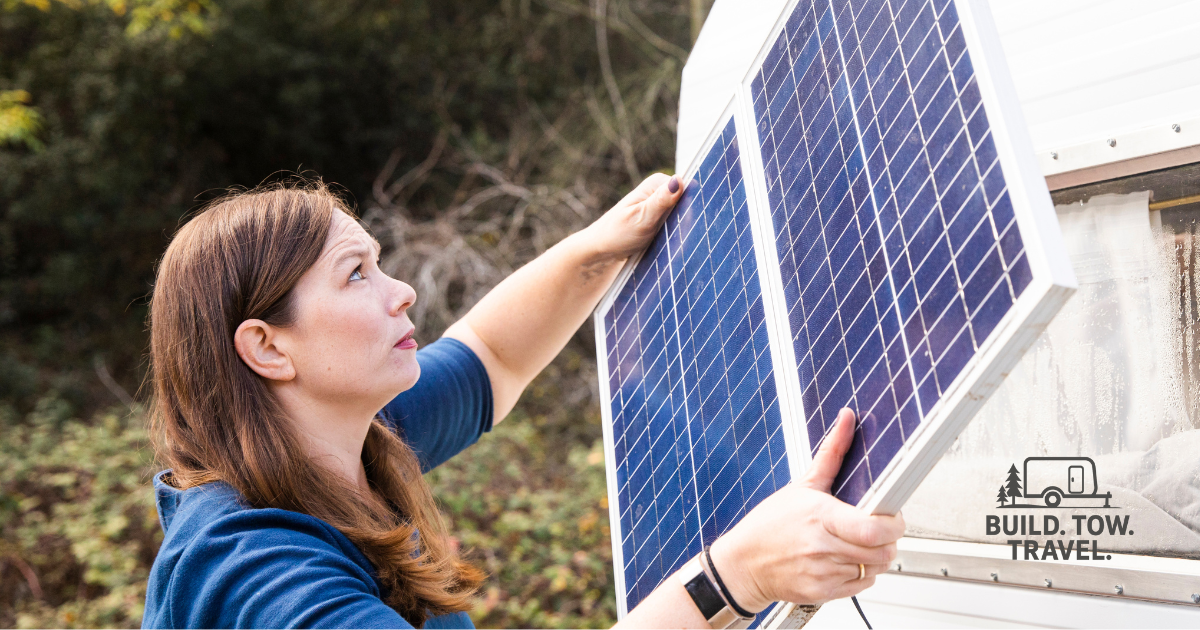
If you’re converting a cargo trailer into a camper, adding solar power is one of the smartest upgrades you can make. Not only does it allow you to camp off-grid, but it also saves money on campground hookups and keeps your devices, lights, and appliances running no matter where you park.
In this guide, we’ll break down everything you need to know about installing solar power in a cargo trailer—from choosing the right panels to setting up batteries and inverters. Plus, we’ll share the best solar gear and accessories (all available on Amazon) to make your setup reliable, affordable, and efficient.
Why Install Solar Power in Your Cargo Trailer?
- Energy independence – Stay powered without needing campground hookups.
- Cost savings – Avoid daily fees for electricity at campsites.
- Eco-friendly camping – Use clean, renewable solar energy.
- Quiet alternative – Skip noisy generators and enjoy peace at camp.
- Long-term investment – Properly installed solar systems can last 20+ years.
What You’ll Need for a Cargo Trailer Solar Setup
Here’s a quick breakdown of the essentials for your solar system:
1. Solar Panels – Capture sunlight and convert it into power.
Portable or roof-mounted options available.
👉 Recommended: Renogy 400W Solar Panel Kit 🌞
2. Charge Controller – Protects your batteries from overcharging.
👉 Recommended: Renogy MPPT Charge Controller
3. Deep-Cycle Batteries – Store your solar energy for use at night.
Lithium or AGM are the most common.
👉 Recommended: Renogy Deep Cycle AGM Battery 12 Volt 200AH
4. Inverter – Converts battery power (DC) into household electricity (AC).
👉 Recommended: AIMS 2000W Pure Sine Wave Inverter
5. Wiring & Mounting Hardware – Connect everything securely
👉 Recommended: Renogy Solar Cable Kit
Step-by-Step Installation Guide
1. Plan Your Solar Setup
Determine how much power you need. A small trailer with lights, fans, and phone chargers may only require a 200W solar kit, while a fridge or microwave setup may need 400W+ with multiple batteries.
2. Mount the Solar Panels
- Roof-mounted panels: Great for permanent setups.
- Portable solar panels: Flexible if you park in the shade.
👉 Tip: Tilt panels for maximum sun exposure if camping in winter
3. Install the Charge Controller
Mount near your battery bank. This device ensures your batteries don’t overcharge and prolongs their lifespan.
4. Connect the Batteries
Wire your batteries in parallel (for more capacity) or series (for higher voltage). Secure them in a ventilated battery box.
5. Add the Inverter
The inverter lets you power standard AC appliances like laptops, coffee makers, or TVs. Mount it close to the batteries for efficiency.
6. Test Your System
Before hitting the road, check connections, run a few appliances, and confirm the system is charging correctly.
How Much Does a Cargo Trailer Solar Setup Cost?
| System Size | Ideal For | Average Cost | Example Kit |
| 100W | Phone charging, lights | $200–$400 | Renogy 100W Starter Kit |
| 200W | Fans, laptops, small fridge | $400–$800 | Renogy 200W Kit |
| 400W+ | Long-term off-grid living | $1,000–$3,000+ | Renogy 400W Kit |
Tips for Maintaining Your Solar Power System
✅ Clean panels regularly for maximum efficiency.
✅ Check battery health every few months.
✅ Store batteries indoors during extreme cold.
✅ Use an energy monitor to track daily usage.
Final Thoughts
Installing solar power in your cargo trailer opens the door to true off-grid freedom. With the right setup, you’ll always have the energy you need for lights, fans, appliances, and even work-from-the-road setups.
Whether you’re a weekend warrior or planning full-time trailer life, investing in solar gear is one of the best upgrades you can make.
👉 Ready to power your trailer with the sun? Check out our top Amazon solar gear picks above and start your DIY installation today!


